
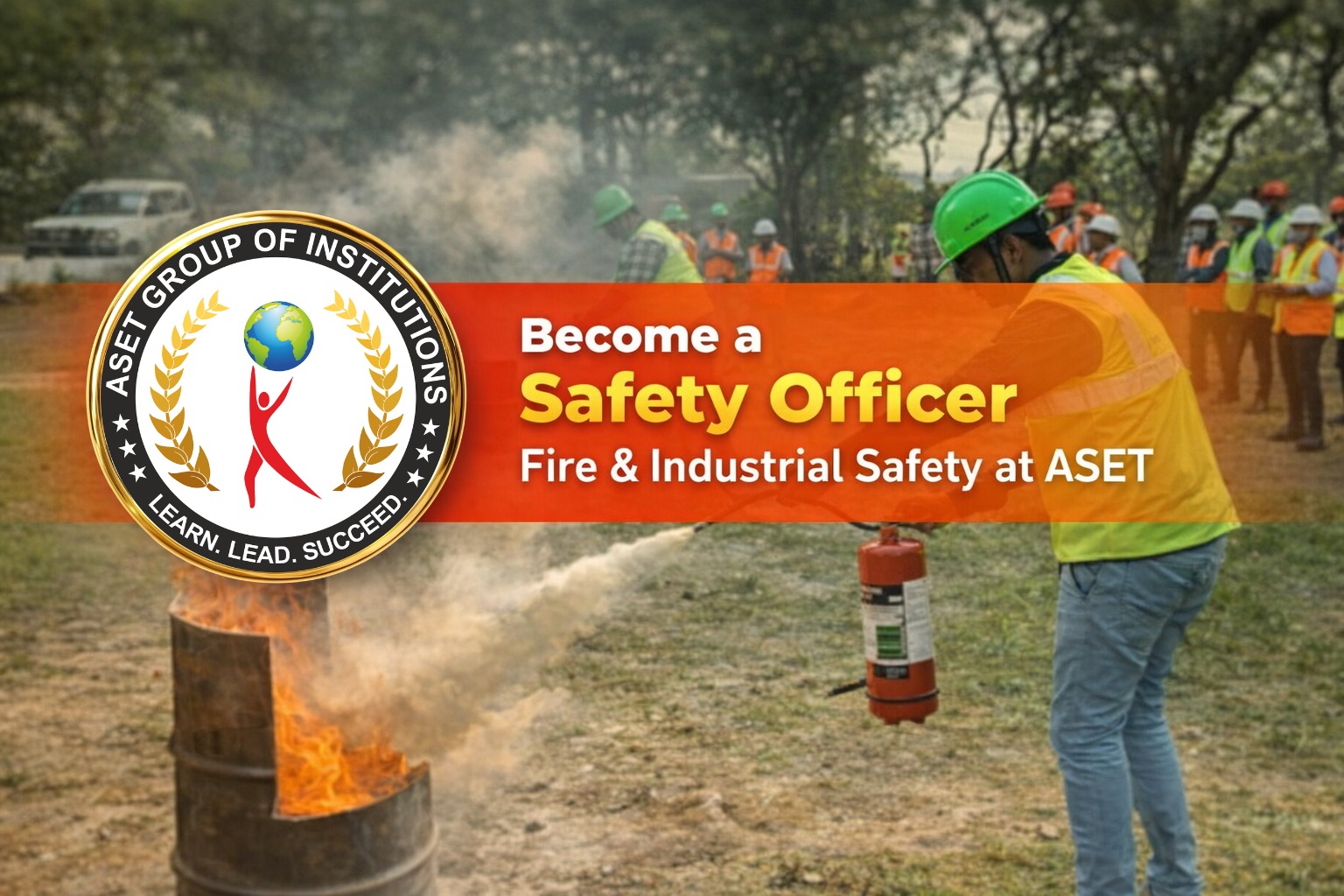
Fire and Industrial Safety courses is a vital field dedicated to protecting human life, industrial assets, and the environment. With rapid industrial growth and strict safety regulations, every organization today requires trained safety professionals to maintain safe operations and prevent risks.
At ASET College, the department focuses on delivering practical, job-oriented safety education. The programs are designed to equip students with real-world skills in hazard identification, fire safety, workplace safety practices, and emergency response.
These programs are ideal for:
- Freshers looking to start a career in safety
- Working professionals aiming for promotion or role upgrade
- Supervisors and managers handling safety responsibilities
- Candidates planning for international safety careers
Program Objectives
- Develop skilled and responsible safety professionals
- Provide knowledge of workplace hazards and safety measures
- Train students in fire prevention and emergency handling
- Build understanding of safety laws and industrial standards
- Improve decision-making during critical situations
Regular courses Offered
| S.No | Courses | Duration | Eligiblity criteria |
|---|---|---|---|
| 1. | B.SC., Fire & Industrial Safety | 3 Years | 12th STD |
| 2. | B.SC., Fire & Industrial Safety ( Lateral Entry ) | 2 Years | 3 Yrs Diploma Students can join B.Sc., Direct Second Year (LE) |
| 3. | M.SC., Industrial Safety And Hygiene | 2 Years | B.E/B.Tech Or UG Degree In Physics & Chemistry, Fire and Industrial Safety |
| 4. | MBA Environment & Industrial Safety | 2 Years | Any Ug Degree |
| 5. | PG Diploma In Fire & Industrial Safety Management | 1 Year | B.E / B.Tech / Any Degree |
| 6. | Diploma Fire & Industrial Safety Engineering | 3 Years | 10th STD |
| 7. | Certificate Course - Fire & Industrial Safety Management | 1 Year | 10th STD And Above |
| 8. | Professional Diploma In Fire & Industrial Safety Management | 6 Months | Any Degree / Diploma / B.E / B.Tech |
| 9. | International Courses Asp Csp | 15Days/3Months/ 6Months/ 1Year | 10th, + 2 , Any Degree Experience Must Be In Safety Field |
| 10. | Diploma in Fire Engineering, Design & Installation | 1 Year | 10th, + 2 , Any Degree Experience Must Be In Safety Field |
Curriculum Highlights
The curriculum is industry-focused and easy to understand, covering:
Core Areas
- Fire Safety & Fire Protection Systems
- Industrial Safety Management
- Occupational Health & Hygiene
- Environmental & Workplace Safety
- Construction & Site Safety
- Electrical & Mechanical Safety
- Safety Laws & Compliance
Specialized Safety Areas
- Chemical Safety
- Food Industry Safety
- Oil & Gas Safety
- Automobile Industry Safety
- Marine & Shipyard Safety
- Warehouse & Logistics Safety
- Aviation Safety
Technical & Practical Training
- Fire Alarm & Detection Systems
- Fire Fighting Equipment Handling
- Risk Assessment (HIRA)
- Disaster & Emergency Management
- Safety Audit & Inspection
Hands-On Exposure
- Fire drills and mock training
- Industrial visits
- Equipment-based practical sessions
- Real incident case studies
Teaching Methodology
The department follows a practical learning approach:
- Smart classroom teaching
- Demonstration-based learning
- Industry case studies
- Guest lectures from professionals
- Field training and site exposure
This ensures students are job-ready, not just theory-based.
Industry Relevance & Certifications
The course prepares students for industries such as:
- Manufacturing & Production
- Oil & Gas Companies
- Construction & Infrastructure
- Aviation & Logistics
- Power Plants
- Shipping & Marine
- Government Safety Departments
Students are also guided for international certifications like:
- ASP (Associate Safety Professional)
- CSP (Certified Safety Professional)
Where Can You Work? (Industries & Companies)
After completing the course, students can work in:
Industries
- Factories and Manufacturing Units
- Construction Sites & Infrastructure Projects
- Oil Refineries and Gas Plants
- Airports and Aviation Sector
- Warehouses and Logistics Companies
- Shipping and Marine Industries
- Automobile Industries
- Government and Public Sector Units
Types of Companies
- Private Industrial Companies
- MNCs (Multi-National Companies)
- Safety Consulting Firms
- Facility Management Companies
- EPC (Engineering, Procurement & Construction) Companies
- Oil & Gas Corporations
- Airport and Aviation Authorities
Job Roles You Can Get
Graduates can start or grow into roles such as:
- Safety Officer
- HSE (Health, Safety & Environment) Officer
- Fire Safety Officer
- Site Safety Supervisor
- Safety Coordinator
- Safety Trainer
- Risk Assessment Executive
- Safety Auditor (with experience)
- Safety Manager (after experience)
Career Growth Path
- Entry Level → Safety Officer / Supervisor
- Mid Level → Senior Safety Officer / HSE Engineer
- Advanced Level → Safety Manager / HSE Head
- International Level → Certified Safety Professional (CSP)
Eligibility & Entry Options
- 10th – Certificate & Diploma Courses
- 12th - Degree Sc- Fire and Industrial Safety
- Diploma Holders – Lateral Entry
- Graduates – PG Diploma / MBA / MSc
- Working Professionals – Part-Time / Certification Courses
Key Advantages of Choosing ASET
- Industry-oriented practical training
- Experienced faculty with field knowledge
- Strong placement assistance
- 3000+ alumni working in India & Middle East
- Exposure to international safety standards
- Focus on real-time skill development
Learning Outcome
After completing the program, students will be able to:
- Identify workplace hazards
- Prevent accidents and risks
- Handle fire safety equipment
- Conduct safety inspections
- Follow industrial safety standards
- Manage emergency situations effectively
Conclusion
Fire & Industrial Safety Management is a high-demand, responsibility-driven career. It offers stable growth, global opportunities, and the chance to work in major industries.
ASET ensures students are trained with practical knowledge, industry exposure, and professional skills, making them ready to work confidently in real industrial environments.