
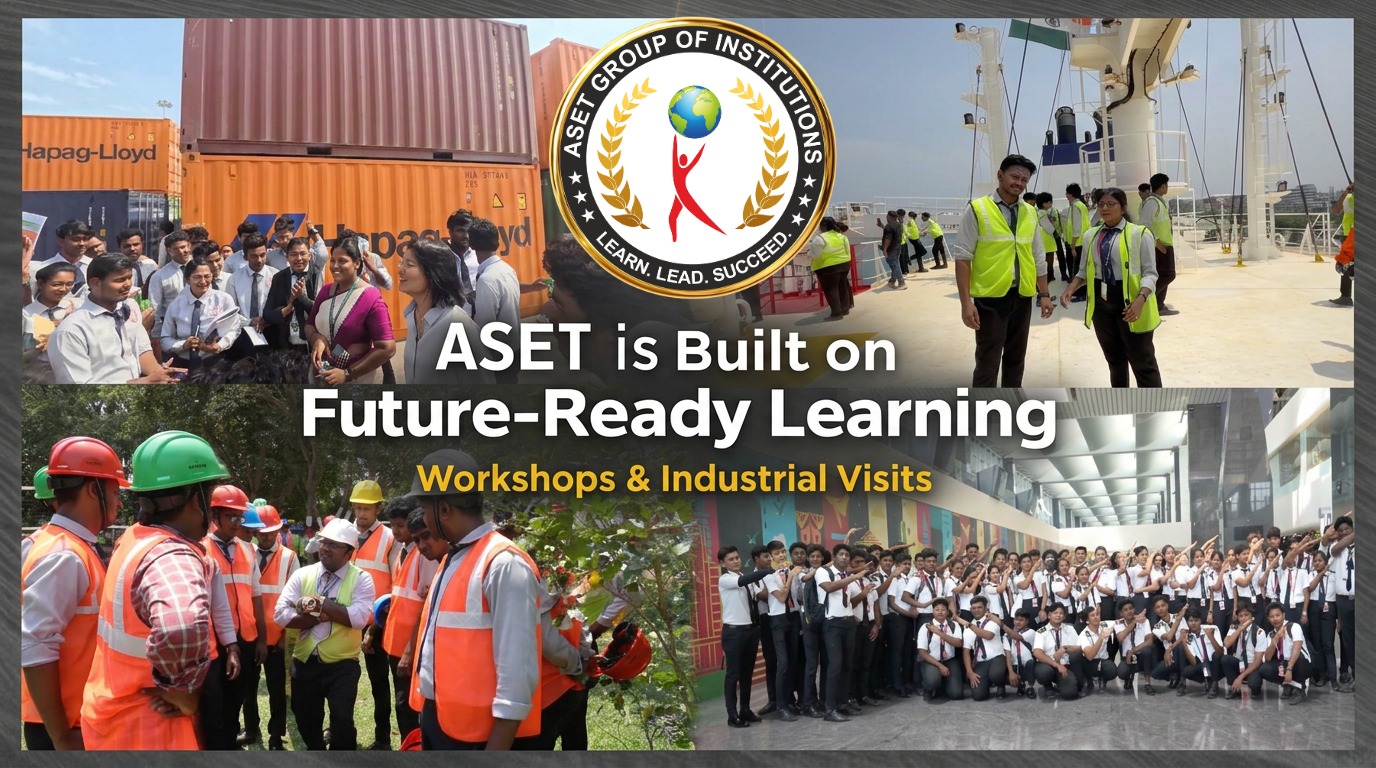
AT ASET, teaching goes beyond the classroom; it is designed to prepare students for real-world challenges and professional success. The institution follows a student-centered approach, where learning is practical, engaging, and aligned with current industry expectations.
We believe that true education is achieved when students not only understand concepts but also apply them confidently in real-life situations. Our teaching practices focus on developing skills, critical thinking, innovation, and professional readiness that support lifelong learning and career growth.
Our Approach to Learning
Smart Classroom Learning
ASET College integrates modern teaching technology to create an interactive learning environment. Through visual presentations, digital content, and smart tools, ASET College ensures that complex concepts are simplified and effectively understood by students.
Practical & Hands-on Training
ASET College follows a “learning by doing” approach, where practical sessions provide real-time exposure and enable students to apply theoretical knowledge in real-world situations.
Live Projects
ASET College encourages students to participate in live projects that simulate industry challenges, helping them develop problem-solving skills, technical expertise, and confidence.
Workshops, Seminars & Guest Lectures
ASET College regularly organizes workshops, seminars, and guest lectures by industry experts, professionals, and academicians to provide insights into current trends and career opportunities.
Case Studies & Interactive Learning
ASET College adopts case-based teaching methods to enhance analytical thinking, decision-making abilities, and real-world problem-solving skills.
Group Activities, Discussions & Brainstorming
ASET College promotes collaborative learning through group activities, discussions, and brainstorming sessions to strengthen communication, teamwork, leadership, and creativity.
Industrial Visits
ASET College organizes industrial visits to provide students with first-hand exposure to workplace environments, technologies, and operational practices.
Value Added Courses (VAC)
ASET College offers value-added and certification courses to enhance student knowledge and keep them aligned with the latest industry advancements.
Continuous Assessment & Feedback
ASET College conducts regular assessments, assignments, presentations, and feedback sessions to ensure continuous improvement and academic progress.
Digital Learning & LMS Integration
ASET College supports learning through digital platforms and Learning Management Systems (LMS), enabling flexible, self-paced, and continuous education.
Additional Learning Enhancements
Project-Based Learning (PBL)
ASET College implements project-based learning to encourage research, innovation, and practical application of academic concepts.
Internship-Linked Learning
ASET College integrates internships with academic learning to provide students with direct industry exposure and hands-on experience.
Simulation & Scenario-Based Training
ASET College uses simulation-based learning methods to help students understand real-world situations and improve decision-making abilities.
Skill Development Programs
ASET College conducts structured training programs to enhance technical, analytical, and job-oriented skills.
Mentorship & Academic Support
ASET College provides continuous mentorship and academic guidance to support student learning, career planning, and personal development.
Soft Skills & Communication Training
ASET College emphasizes the development of communication, presentation, teamwork, and professional behaviour through dedicated training sessions.
Innovation & Research Activities
ASET College encourages students to participate in research, innovation, and idea-driven activities to foster creativity and critical thinking.
Career-Oriented Learning Modules
ASET College offers career-focused training, including resume building, interview preparation, and aptitude development, to improve employability.
Peer Learning & Knowledge Sharing
ASET College promotes peer learning through collaborative discussions, presentations, and knowledge-sharing activities among students.