
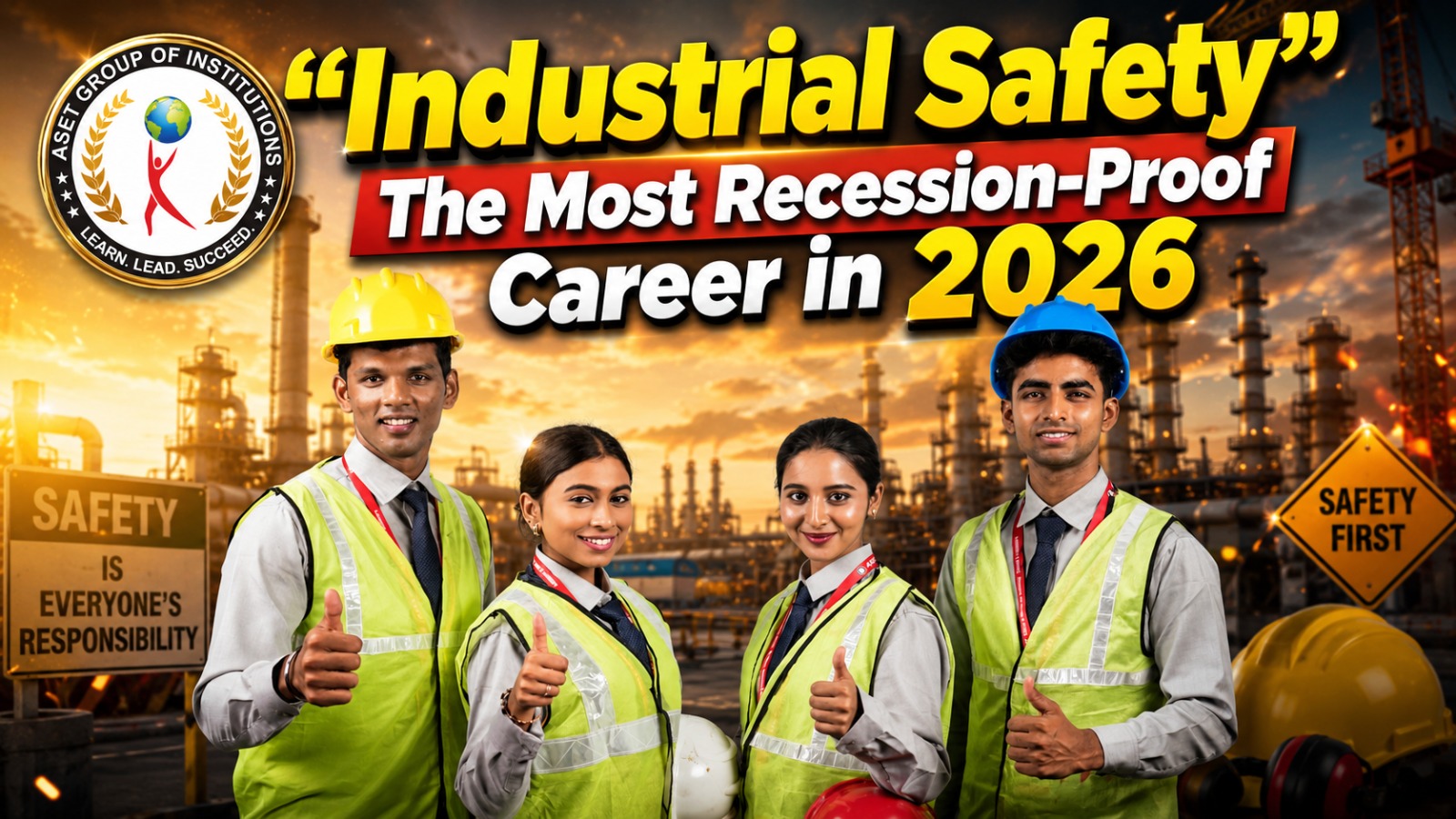
Why Industrial Safety is One of the Most Recession-Proof Careers in 2026
Introduction
Every industry goes through ups and downs. Markets change, economies slow down, and some job roles get affected during recessions. But there are a few career domains that remain stable no matter what the economic situation is.
One such field is Industrial Safety.
In 2026, Industrial Safety has become one of the most reliable and future-secure career paths because industries cannot afford to compromise on safety even during financial slowdown.
At ASET College, we strongly emphasize Industrial Safety as a career that is not only important but also highly sustainable in the long term.
What is Industrial Safety?
Industrial Safety focuses on protecting:
- Workers
- Equipment
- Work environments
- Manufacturing processes
- Operational systems
It ensures that industries run without accidents, hazards, or unsafe working conditions.
In simple terms:
Industrial Safety professionals make sure that workplaces are safe, compliant, and risk-free.
Why Industrial Safety is Recession-Proof
1. Safety Cannot Be Ignored in Any Economy
Even during recessions, companies cannot stop safety operations. Factories, construction sites, oil & gas industries, and logistics companies must continue safety compliance.
Safety is not optional, it is a legal requirement.
2. Government Regulations Remain Strict
Governments enforce strict safety laws regardless of economic conditions. Companies must follow:
- Occupational safety standards
- Environmental safety rules
- Fire and hazard regulations
- Workplace compliance norms
This ensures continuous demand for safety professionals.
3. Every Industry Needs Safety Experts
Industrial Safety is not limited to one sector. It is required in:
- Manufacturing industries
- Construction companies
- Oil and gas sector
- Aviation and airports
- Logistics and warehouses
- Power plants
- Chemical industries
So even if one sector slows down, others continue hiring.
4. Accidents and Risk Management Never Stop
Risks exist in every industry, regardless of the economy. Companies always need professionals who can:
- Prevent accidents
- Conduct safety audits
- Manage emergency situations
- Train employees on safety procedures
This makes the role always relevant.
Importance of Industrial Safety Courses
To build a career in this field, students need proper education and training.
Industrial Safety courses help students learn:
- Risk assessment techniques
- Hazard identification
- Fire safety management
- Environmental safety systems
- Workplace safety laws
- Emergency response planning
- Industrial compliance standards
These skills prepare students for real-world industry environments.
Career Opportunities in Industrial Safety
After completing Industrial Safety education, students can work as:
- Safety Officer
- HSE (Health, Safety & Environment) Executive
- Safety Supervisor
- Risk Management Executive
- Safety Auditor
- Compliance Officer
These roles are highly demanded across India and abroad.
ASET College – Building Future Safety Professionals
At ASET College, we focus on preparing students for real industry needs, not just theoretical learning.
Our Industrial Safety education approach includes:
- Strong classroom foundation
- Practical safety training exposure
- Industry-oriented learning
- Awareness of real workplace hazards
- Career guidance and placement support
We aim to develop professionals who can confidently work in high-responsibility environments.
Conclusion
Industrial Safety is not just a career it is a responsibility that protects lives, assets, and industries.
In 2026, it stands out as one of the most recession-proof and stable career paths because safety requirements never decrease, even when economies slow down.
With proper training from institutions like ASET College, students can build a strong and secure future in a field that will always remain essential to every industry.