
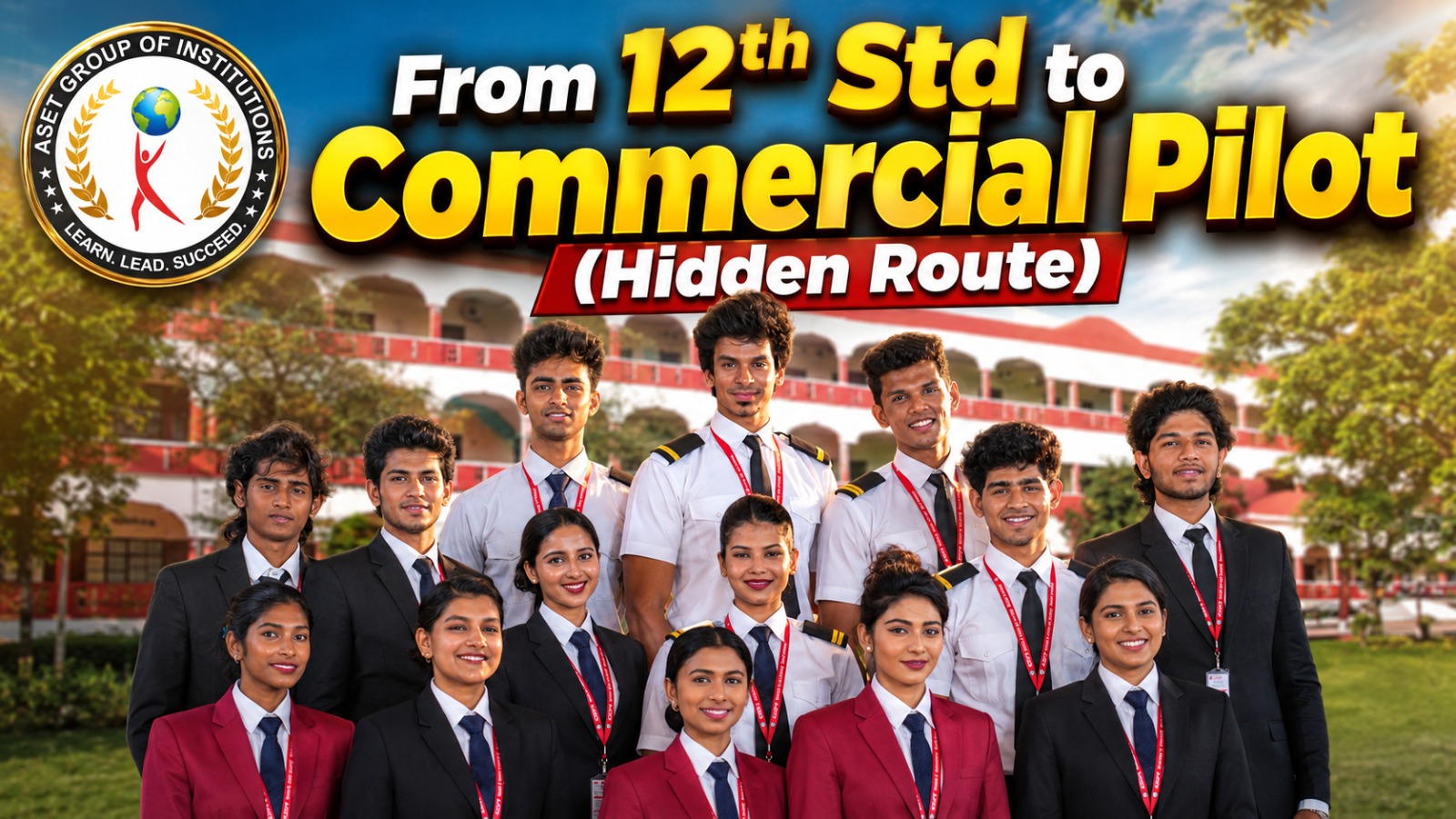
What is the Most Efficient Path to Becoming a Commercial Pilot in 2026?
Introduction
Many students today are clear about traditional career paths like Engineering, MBBS, BBA, or MBA. But when it comes to becoming a Commercial Pilot, there is still a lot of confusion.
A large number of students dream of becoming pilots, but they don’t know:
- How to start after 12th
- Whether they need a degree or direct CPL training
- What to study in college
- How airline selection actually works
- What to do after completing CPL
Even students who already complete CPL often ask the same question — “What is the next step?”
This is why structured aviation guidance has become very important in 2026.
What is the Zero to Cockpit Journey?
Zero to Cockpit simply means a step-by-step guided pathway that takes a student from beginner level to becoming a commercial pilot ready for airline opportunities.
It includes:
- Basic aviation knowledge (Ground training)
- DGCA or equivalent licensing preparation
- Simulator training
- Flying hours in real aircraft
- Communication and aviation procedures
- Career readiness training
The goal is to make the journey clear, structured, and less confusing for students.
Education Pathways Before Becoming a Pilot
Before entering cockpit training, students often take different academic routes. In aviation careers, these are common pathways:
1. BSc Aviation
A science-based program focused on:
- Aviation fundamentals
- Physics and aerodynamics
- Air navigation basics
- Technical understanding of aircraft systems
2. BBA Aviation
A management-focused program covering:
- Airline and airport management
- Aviation business operations
- Customer service and logistics
- Aviation industry structure
3. MBA in Aviation
For students who want leadership roles in aviation:
- Airline management
- Airport operations management
- Aviation business strategy
- HR and operations in aviation companies
These degrees help students build strong academic foundations, but they are not enough alone to become pilots.
After or along with these programs, students must complete pilot training and licensing (CPL) to actually fly commercial aircraft.
Why Students Are Still Confused
Even with multiple education options, many students still don’t understand the full journey.
Most common confusion includes:
- “Do I need a degree or not?”
- “Can I become a pilot directly after 12th?”
- “What is CPL and how is it different from a degree?”
- “How do pilots actually get airline jobs?”
Even students who go abroad for CPL training sometimes return unsure about:
- Job opportunities in India
- Airline selection process
- Type rating requirements
- Career progression after licensing
The problem is not ambition — it is lack of complete guidance.
How Zero to Cockpit Solves This
The Zero to Cockpit model focuses on giving students a clear and structured aviation journey.
1. From Education to Cockpit Guidance
Whether a student is doing:
- BSc Aviation
- BBA Aviation
- MBA Aviation
- Or direct CPL training
They are guided step-by-step toward becoming a pilot.
2. Complete Career Path Clarity
Students are not just trained for exams, but also for:
- Airline expectations
- Interview preparation
- Communication skills
- Professional discipline in aviation
3. Structured Training Flow
Ground School → Simulator → Flying → Licensing → Career readiness
4. Reduced Confusion
Students don’t have to figure out the aviation system alone.
ASET College – End-to-End Aviation Support
At ASET College, we understand that becoming a pilot is not just about training — it is a complete career journey.
That is why we support students from:
- Academic foundation (BSc Aviation / BBA / MBA pathways)
to - Professional pilot training (Zero to Cockpit pathway)
to - Career guidance and placement awareness
Our approach is end-to-end aviation support, ensuring students are not left confused at any stage of their journey.
We focus on:
- Building strong academic grounding
- Providing clear aviation career direction
- Supporting students through CPL journey
- Guiding them toward airline readiness
At ASET, the goal is simple:
From classroom learning to cockpit readiness — we stand with our students at every step.
Is Zero to Cockpit the Most Efficient Path in 2026?
There is no single path for everyone, but efficiency depends on:
- Clarity of training
- Structured learning process
- Reduced confusion for students
- Career readiness after CPL
In many cases, structured programs like Zero to Cockpit help students move faster and more confidently toward their aviation goals.
However, success still depends on:
- Student dedication
- Flying skill
- Medical fitness
- Airline performance standards
Conclusion
Becoming a commercial pilot in 2026 is still one of the most exciting and respected careers, but it is also one of the least understood.
Most students don’t struggle with interest they struggle with direction.
That is why structured pathways like Zero to Cockpit, combined with academic programs like BSc Aviation, BBA Aviation, and MBA Aviation, play an important role in shaping careers.
At ASET College, our mission is simple to guide students from education to aviation career to cockpit readiness, ensuring no student is left without clarity about their future.