
What Do International Student Exchange Programs Teach You About Global Aviation?
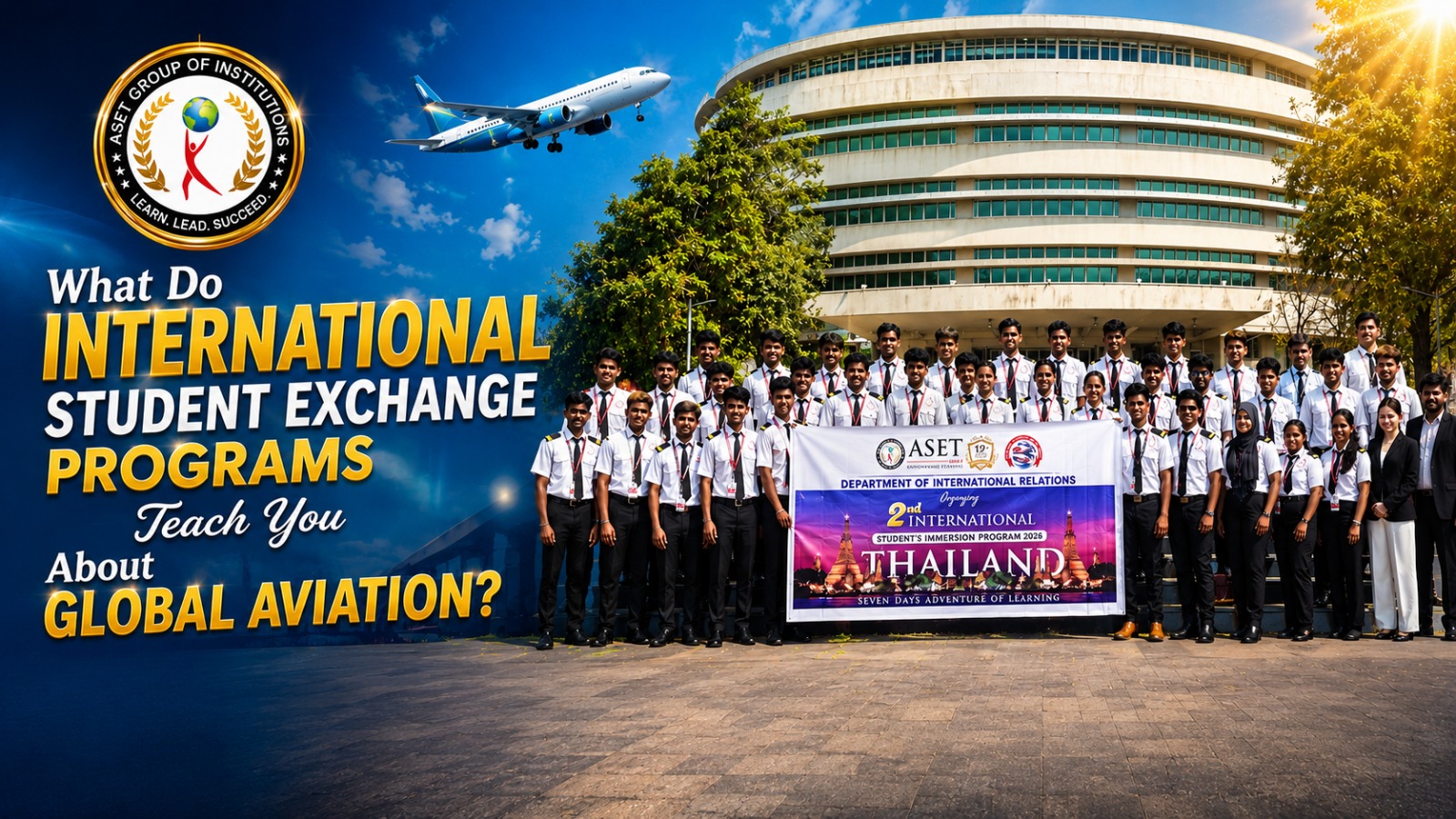
International student exchange programs offer a concentrated, real-world classroom for understanding global aviation’s complexity. For aviation students and early-career professionals, exchanges deliver exposure that classroom instruction alone cannot: operational diversity, regulatory contrast, cross-cultural teamwork, and firsthand observation of global supply chains. This article examines the core lessons exchange programs teach about global aviation and how participating students can convert those lessons into career advantage.
Operational diversity and system complexity
Exchange programs place students inside different aviation systems—airports, airlines, MRO facilities, and regulatory agencies—revealing how operational practices vary with geography, traffic mix, and economic context. Students learn to compare runway capacity management, ground handling workflows, and turnaround planning across hub types (mega‑hubs versus regional airports). Seeing these differences teaches that aviation operations are context dependent: solutions that work in one market may fail in another without adjustments for infrastructure, labor practices, or local regulations.
Regulatory frameworks and international standards
A key learning area is the patchwork of national regulations interfacing with international standards. Exchanges expose students to the roles of ICAO, IATA, EASA, FAA equivalents, and local civil aviation authorities. They observe how safety directives, slot coordination, and security protocols get interpreted and enforced differently. This direct exposure deepens understanding of compliance complexity, the importance of mutual recognition agreements, and why harmonization—while ideal—is difficult in practice.
Airline economics and network strategy
Studying abroad with partner carriers or visiting airline operations offers insight into airline business models and network design. Students see how carriers optimize fleet mix, route networks, and hub‑and‑spoke versus point‑to‑point strategies based on market demand, bilateral traffic rights, and cost structures. Classroom models are made tangible: yield management, ancillary revenue strategies, and codeshare alliances become easier to grasp when viewed through the lens of a real carrier’s scheduling and revenue‑management choices.
Technology integration and innovation diffusion
Exchange programs often place students in environments with differing levels of technology adoption. Comparing airports with advanced A‑CDM (Airport Collaborative Decision Making), common-use systems, or biometric solutions to facilities using manual or semi‑automated processes teaches lessons in technology diffusion, capital constraints, and human factors. Students learn how digital transformation in aviation is not just about technology, but about change management, training, and regulatory acceptance.
Cross-cultural communication and leadership
Global aviation is inherently multinational. Exchanges immerse students in multicultural teams—air traffic control coordination, ground handling crews, or international operations rooms—sharpening cross‑cultural communication and conflict resolution skills. Students learn to navigate language barriers, different work cultures, and varied approaches to authority and safety reporting. These soft skills are critical for leadership roles in airlines, airports, and international organizations.
Crisis management and resilience practices
Participating in exchange programs often coincides with observing different approaches to operational disruptions—weather events, system outages, or public‑health-related changes. Students learn diverse contingency planning, passenger re‑accommodation strategies, and stakeholder communication techniques. Comparing these approaches fosters an appreciation for resilience planning and highlights transferable practices that can be adopted across markets.
Regulatory and commercial impacts of sustainability
Sustainability is reshaping aviation—from SAF (sustainable aviation fuel) adoption to airport energy management and carbon reporting. Exchanges show how national policy, availability of SAF, and infrastructure investments drive different sustainability trajectories. Students witness pilot projects, airport-level carbon initiatives, and airline fleet renewal strategies—providing practical examples of how environmental policy and commercial decisions intersect.
Professional networking and career pathways
Exchange programs expand professional networks, connecting students to international mentors, potential employers, and peer cohorts. Exposure to foreign internship opportunities, faculty collaborations, and industry site visits can translate into career opportunities in airlines, airports, MROs, or regulatory bodies. For students from regions with developing aviation sectors, exchanges are often the bridge to global aviation careers.
Applied learning and research opportunities
Students who undertake exchange projects—cases, internships, or capstone research—gain empirical insights and data access not available at their home institutions. These applied projects can produce publishable research, operational improvement proposals, or technology pilots, strengthening a student’s profile for postgraduate programs or industry roles focused on operations, policy, or technology.
How to maximize learning during an exchange
- Set clear learning goals: identify operational areas, regulations, or technologies you want to study.
- Seek hands‑on placements: prioritize internships, site visits, or lab work over classroom‑only programs.
- Keep a comparative journal: document differences in processes, regulations, and culture to build transferable frameworks.
- Network intentionally: arrange informational interviews with local industry professionals and faculty.
- Convert experiences into demonstrable outputs: prepare case studies, presentations, or a research paper to showcase learning.
Conclusion
International student exchange programs offer a condensed, practical education in global aviation: operational diversity, regulatory interplay, technological adoption, sustainability tradeoffs, crisis response, and cross‑cultural leadership. For students and early professionals, the value lies not just in exposure but in intentionally converting observations into skills, research, and professional connections. Well‑designed exchanges accelerate the transition from theoretical knowledge to global aviation competence—an advantage in today’s interconnected industry.