
India’s Aviation Boom
What B.Sc Aviation and Airline/Airport Management Graduates Need to Know
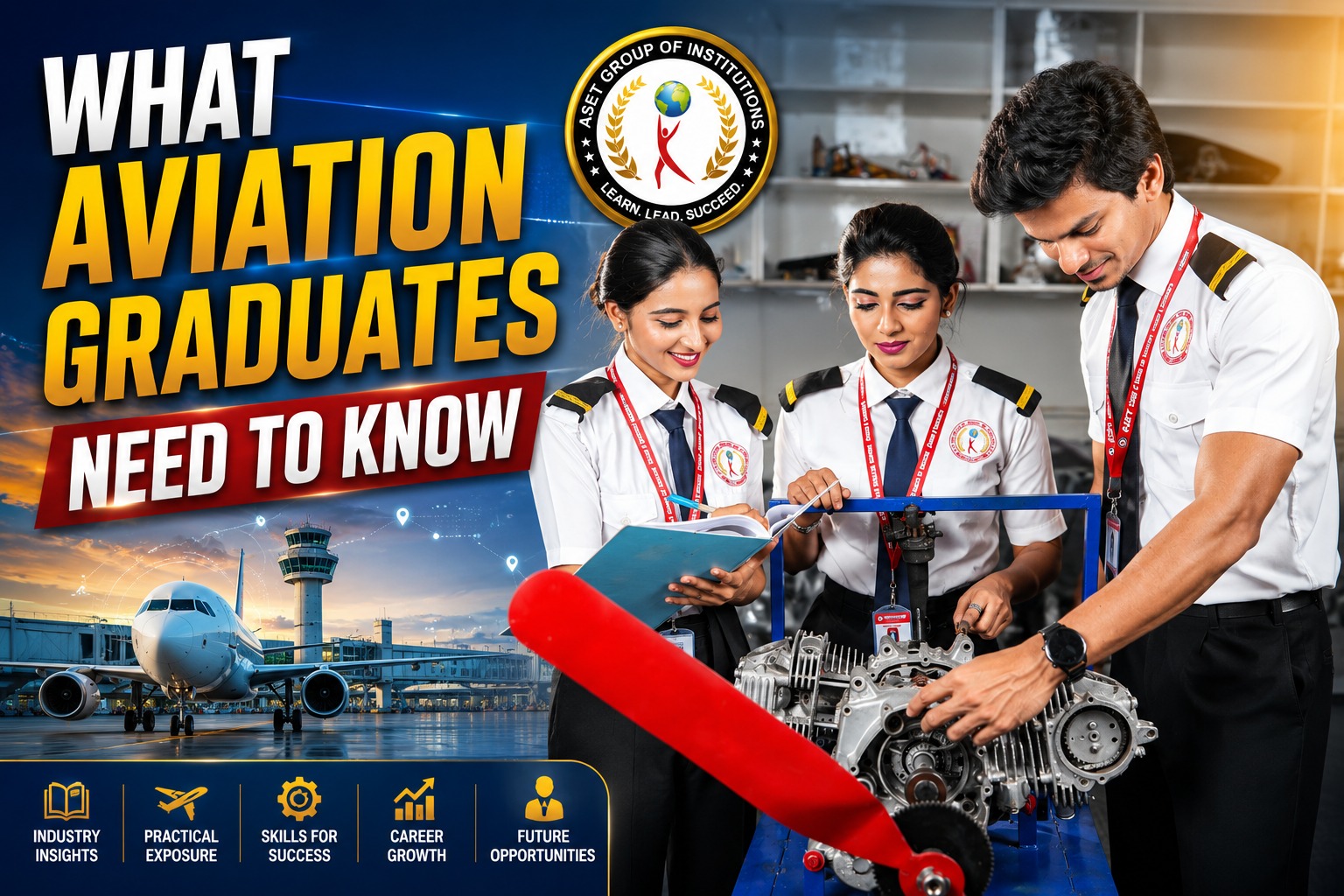
India’s aviation sector is expanding quickly, and that growth is creating real opportunities for students in B.Sc Aviation and Airline/Airport Management. The market is being driven by rising passenger traffic, airport capacity expansion, regional connectivity, and stronger demand for skilled aviation professionals.
Why This Topic Matters
India is now the world’s third-largest domestic aviation market, and passenger traffic at Indian airports reached 412 million in FY25, with projections of 665 million by FY31. The number of operational airports has also grown sharply, rising from 74 in 2014 to 164 in 2025. For students, this means aviation is no longer a narrow career track; it is a large, expanding industry with multiple entry points.
At the same time, India’s aviation growth is not just about more flights. It is also about airport modernisation, technology adoption, MRO expansion, and stronger training ecosystems. That makes the sector especially relevant for graduates who want careers in operations, ground handling, airline support, airport administration, and aviation services.
India’s Aviation Growth Story
India’s aviation growth has been supported by infrastructure development and policy reforms. The expansion of airport capacity, regional connectivity through schemes like UDAN, and investment in modernisation have made air travel accessible to more people across the country. Cargo volumes have also grown, which adds more roles in logistics, freight, and airport operations.
The long-term outlook is also strong. Industry forecasts suggest India’s commercial fleet will continue to expand significantly over the next decade, and the country is expected to remain one of the fastest-growing aviation markets in the world. That growth creates demand not only for pilots and engineers, but also for management graduates who can run the airport and airline ecosystem efficiently.
What B.Sc Aviation Graduates Should Know
A B.Sc Aviation degree can lead to a wide range of careers beyond flying. Graduates may move into airport operations, flight dispatch, cargo handling, airline support, safety roles, load and trim, ground operations, and aviation compliance. This makes the degree valuable for students who want operational exposure and multiple career pathways.
The most important thing for B.Sc Aviation students is to build a practical understanding of how airports and airlines function together. That includes learning about airline scheduling, aircraft turnaround, passenger handling, safety procedures, and coordination with ground teams. In a fast-growing market like India, employers value candidates who can understand real operations, not just classroom theory.
What Airline and Airport Management Graduates Should Know
Airline and Airport Management programs prepare students for leadership and coordination roles in aviation. These graduates are often suited for airport operations, terminal management, passenger service, airline administration, station coordination, and ground operations. Because airports are complex service environments, management graduates must learn how to balance efficiency, safety, and customer experience.
Students in this stream should focus on communication, problem-solving, teamwork, and decision-making under pressure. Airlines and airports need people who can respond quickly to delays, passenger issues, flight disruptions, and operational changes while maintaining service quality. That is where management education becomes a strong advantage.
Key Roles to Explore
Graduates from both streams can look at several career directions. Common roles include airport operations executive, passenger service agent, ground operations officer, airline operations executive, cargo executive, station manager assistant, and aviation safety support roles. With experience, these paths can grow into supervisory and managerial positions.
Some roles are more operational, while others are more managerial. B.Sc Aviation graduates often start closer to the technical and operational side, while Airline/Airport Management graduates may move faster into coordination, administration, or customer-facing management roles. Both routes are valid, and the better path depends on the student’s strengths and interests.
Skills That Will Matter Most
The aviation industry is rewarding candidates who combine knowledge with adaptability. Core skills include communication, operational awareness, airport procedures, customer handling, documentation, teamwork, and safety mindset. Since aviation is a time-sensitive industry, students must also be comfortable working in shifts and under pressure.
Digital and analytical skills are becoming more important too. Airlines and airports increasingly depend on technology, data, and process efficiency, so familiarity with reporting, systems, and performance tracking will help graduates stand out. Students who learn both service skills and operational thinking will be better positioned for long-term growth.
Career Growth Pathways
The usual career path begins with entry-level operational roles and grows into supervision and management. A student may start as an executive, coordinator, or officer and later move into shift supervision, operations management, or station leadership. This progression is common in airports, airlines, and ground-handling companies.
India’s aviation boom is especially useful for career growth because more airports, more routes, and more passengers create more positions at every level. There are also opportunities in MRO, cargo, airport support services, training, and aviation-related business functions. In other words, the growth is not only at the top; it opens doors across the entire system.
What Students Should Do Now
Students should focus on practical exposure, internships, communication, and industry awareness. Airport visits, internships, training programs, and certification-based learning can make a big difference when applying for jobs. It is also smart to follow aviation news, airport expansion trends, and airline developments so that career choices stay aligned with the market.
Another important step is to choose a specialization early. Students who enjoy operations can focus on airport functioning and ground handling, while those who enjoy management can lean toward station coordination, customer experience, or airline administration. The earlier the student identifies a direction, the easier it becomes to build relevant skills and experience.
Final Takeaway
India’s aviation boom is creating a strong future for students in B.Sc Aviation and Airline/Airport Management. The sector is expanding fast, and employers need professionals who understand operations, service, safety, and coordination. Students who prepare early and build practical skills can turn this growth into a real career advantage.